CATARACT
CATARACT
A Cataract is a cloudy (opaque) area(s) that develop in the lens of the eye. The lens should normally be clear. However, with cataract, the affected lens becomes cloudy like frosted glass and affects vision. Most commonly, cataracts occur in older people, and they usually develop gradually.
The lens of the eye sits just behind the pupil, which is the opening in the colored part of the eye (iris). The lens is held in place by a ring of supporting tissues. Its job is to focus the image of what you see on to the back of your eye. The lens is made of water and protein, and is normally clear because of the way the protein is arranged. With ageing and other causes of cataract, some of the protein can 'clump together' and this starts to cloud the lens. Over time, this makes it harder to see. Things are made worse by a gradual tendency for the lens to discolor with age, acquiring a brownish tinge which can affect color vision, and can also make reading less clear.
Who can develop a cataract?
Age-related cataract (senile cataract)-This is by far the most common type, and it affects older people, becoming more common with increasing age. Men and women are equally affected. Often both eyes are affected but one eye is typically worse than the other.
Congenital cataracts (present at birth)-These are uncommon, but important to diagnose early, and must be removed as early as possible after birth. This is because vision and seeing have to be learnt very early in infancy. A cataract that is present at birth stops the eye from learning to see. It can cause total loss of vision (severe sight impairment) which may then persist even if the cataract is removed later in life.
Apart
from age, the most significant cataract risk factors are
- Smoking Diabetes mellitus Systemic corticosteroids
- Obesity Previous eye injury Previous eye surgery.
- Eye trauma UV exposure Poor nutrition
- Smoking Alcohol Toxins - eg, drugs of abuse.
- Dehydrating illness crises Severe short-sightedness (high myopia)
- Statin medicines used to reduce cholesterol.
- Use of hormone replacement therapy (HRT) for a prolonged period.
- Metabolic disorders - eg, galactosaemia in children.
- Inflammatory and degenerative eye diseases. e.g.,Uveitis.
- Genetic studies estimate heritability of an age-related cataract to be around 50%.
Cataracts and diet
There
has been much discussion around the possible role of diet and dietary
supplements in the prevention of cataract. Discussion has centered around the possible protective role of antioxidant vitamins, and of
diets with low or absent meat content.
Research
continues in this area. At present it seems that firm conclusions
have not yet been drawn around the role of dietary modification or
supplements in those with healthy diets (as opposed to correction of
deficiencies in those whose diets are not adequate).
Symptoms
At
first one may notice the vision becoming a bit blurred. With time,
one may notice some of the following:
- Spots in vision.
- Haloes around bright lights - for example, street lights.
- Seeing less well in brightly lit rooms or in sunshine.
- Becoming easily dazzled by bright lights such as the headlights of an oncoming car.
- Washing out or fading of colours.
- Over the years vision may gradually become worse.
- The visual impairment is not corrected by glasses.

Depending
on the severity of the cataract, the effect on sight can range from
vision being slightly blurred to severe loss of vision in the
affected eye.
Diagnosis
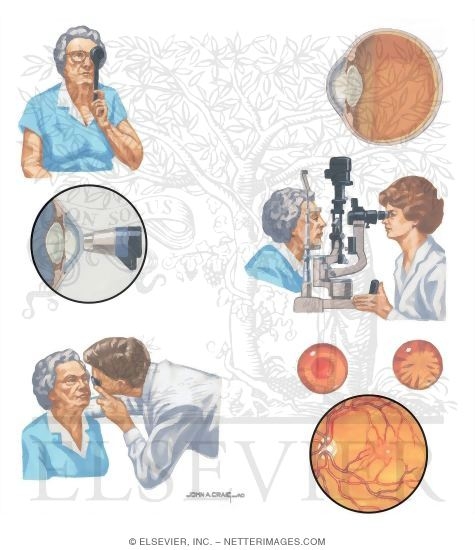
Cataracts
can be diagnosed through a comprehensive eye examination. This may
include:
- Patient history to determine if vision difficulties are limiting daily activities and other general health concerns affecting vision.
- Visual acuity measurement to determine to what extent a cataract may be limiting clear distance and near vision.
- Refraction to determine the need for changes in an eyeglass or contact lens prescription.
- Evaluation of the lens under high magnification and illumination to determine the extent and location of any cataracts.
- Evaluation of the retina of the eye through a dilated pupil.
- Measurement of pressure within the eye.
- Supplemental testing for color vision and glare sensitivity.
:max_bytes(150000):strip_icc():format(webp)/3421854_color-5bedb85846e0fb0051b886d9.png)
Further
testing may be needed to determine how much the cataract is affecting
vision and to evaluate whether other eye diseases may limit vision
following cataract surgery.
Using the information from these tests, the doctor can determine if one has cataracts and give advise on treatment options.
Using the information from these tests, the doctor can determine if one has cataracts and give advise on treatment options.
Management
Cataract
treatment is based on the level of visual impairment they cause. If a
cataract minimally affects vision, or not at all, no treatment may be
needed. Patients may be advised to monitor for increased visual
symptoms and follow a regular check-up schedule.
In some cases, changing the eyeglass prescription may provide temporary vision improvement. In addition, anti-glare coatings on eyeglass lenses can help reduce glare for night driving, and increasing the amount of light used when reading may be beneficial.
When a cataract progresses to the point that it affects a person's ability to do normal everyday tasks, surgery may be needed. Cataract surgery involves removing the lens of the eye and replacing it with an artificial lens. The artificial lens requires no care and can significantly improve vision. Some artificial lenses have the natural focusing ability of a young healthy lens.
In some cases, changing the eyeglass prescription may provide temporary vision improvement. In addition, anti-glare coatings on eyeglass lenses can help reduce glare for night driving, and increasing the amount of light used when reading may be beneficial.
When a cataract progresses to the point that it affects a person's ability to do normal everyday tasks, surgery may be needed. Cataract surgery involves removing the lens of the eye and replacing it with an artificial lens. The artificial lens requires no care and can significantly improve vision. Some artificial lenses have the natural focusing ability of a young healthy lens.
There
is no proven prevention or medical treatment for a cataract. Modern
cataract surgery involves lens extraction and replacement. Surgical
removal of the cataract is the only effective treatment to restore or
maintain vision.
I shall discuss about various types of cataract surgeries and Intraocular Lenses in the next blog.
Please comment and give your suggestions for topics of your interest.
Thank You.
* The author is a Consultant Ophthalmologist,Eye Surgeon and Medical Director of Prem Jyoti Eye Care and Hospital, Bhilad(India)
Great job
ReplyDeletenicely presented
ReplyDelete